Studio Light or Daylight in Fashion Photography: Choosing the Mood
Studio light or daylight in fashion photography changes how cloth, skin and colour read; learn to diagnose flatness, harshness and distracting backgrounds.
A pale silk blouse looks crisp beneath a studio softbox, then turns grey beside a north-facing window. In fashion photography, studio light or daylight is not simply a choice between equipment and convenience: each shapes texture, atmosphere and what the viewer notices first.
The useful question is not which source is better. It is which visual problem is getting in the way, and whether controlled light or available daylight offers the clearer fix. The suggestions below address common symptoms in that order, from lost fabric detail to a frame whose background has become the main event.
When fabric looks flat, check the direction of the light
A dress can lose its folds when light reaches it from close to the camera. The illumination fills small shadows, so pleats, seams and surface grain appear less distinct. This can suit a smooth, graphic image, but it may make wool, lace or gathered cloth seem oddly unconvincing.
In a studio, move the softbox to one side of the model rather than keeping it directly in front. A broad source still gives gentle shadows, while its angle lets the fabric form visible highlights and darker turns. A white reflector opposite the light can soften those shadows without erasing them.
Daylight offers a similar adjustment if the model can turn relative to a window. Side light often reveals weave and folds; front-facing window light tends to make the result more even. A sheer curtain can soften a hard beam, though it will not change the direction from which that beam arrives.
When shadows feel harsh, soften the source before adding more light
A sharp beam can leave a dark edge beneath a collar or cast an abrupt shadow across a face. In the studio, this often means the light source appears small from the model’s position, or sits too far away to wrap around the subject softly. A larger softbox or diffusion panel can broaden the transition.
With daylight, direct sun through a window can produce the same hard-edged effect. Move the subject out of the beam, diffuse the window with a translucent curtain, or wait until the light becomes less direct. Adding a reflector may lift a shadow, but it will not soften the shadow’s edge; it is a separate remedy.
Keep some shadow if the image needs shape. The aim is not to illuminate every fold into submission, but to avoid a contrast that distracts from the garment or expression. A black card opposite the light can deepen a shadow deliberately when the scene has become too evenly filled.
When colour shifts, separate the light source from the camera setting
A white shirt can look warm near a tungsten lamp and cool beside blue sky. Mixed sources make the problem harder: a window and a room lamp may cast different colours across the same garment. Editing can correct a mild overall cast, but it cannot easily make two differently lit areas agree.
For studio work, use one consistent light type where practical and set the camera’s white balance to match it. In daylight, choose a white-balance setting that suits the dominant source, then avoid leaving a strong household lamp in the frame’s lighting mix. A grey card photographed under the same light can provide a useful reference during editing.
Colour also depends on the materials themselves. A glossy fabric reflects nearby colour, while a matte surface usually holds it more quietly. If a bright wall or coloured reflector is tinting the clothing, change the surroundings before reaching for more complicated corrections.
When the background competes, decide what the image should keep
Daylight can make a location feel specific: a window frame, a pale wall or the softened outline of a street gives the photograph a sense of place. It can also reveal clutter that seemed harmless before the camera was raised. Studio light offers a more controlled background, but a seamless paper roll or plain wall can feel detached if the clothing depends on context.
First decide whether the setting contributes to the fashion story. If it does, adjust the model’s position or camera angle to retain the useful detail and lose the distracting one. If it does not, use a simpler backdrop or move the subject farther from it so the background falls less sharply into attention.
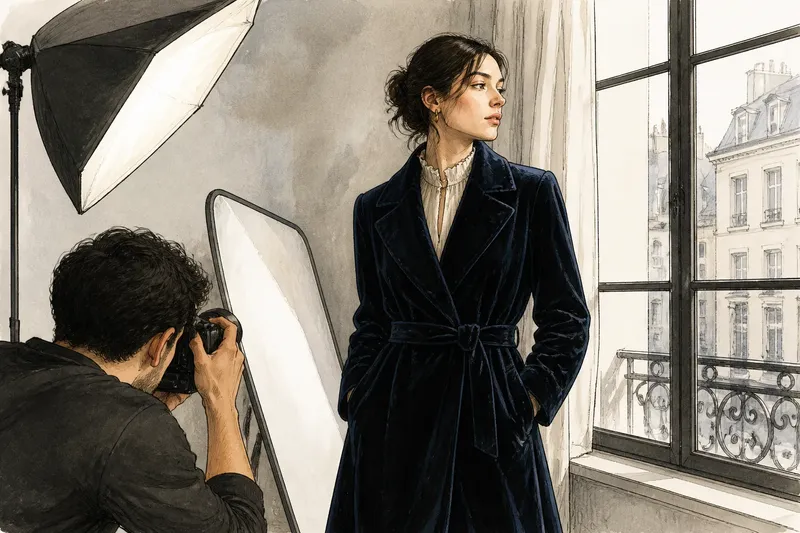
Say you are photographing an invented dark velvet coat beside a bright window, and the pale curtain keeps pulling the eye away from the pile. Turning the model so the window becomes side light, then framing out most of the curtain, should leave the velvet’s surface visible while making the background less dominant. The change is modest; modest is often enough.
How should you choose between studio light and daylight?
Which light shows fabric texture more clearly?
Neither source does this automatically. Side lighting from a studio softbox or window usually reveals folds and weave more clearly than flat light from the camera direction.
Is daylight easier to work with?
Daylight needs little equipment, but its direction and intensity can change while the shoot is under way. Studio light takes more setup and offers steadier control over where highlights and shadows fall.
Can studio light look natural?
Yes, when its direction, softness and colour resemble the effect you want rather than announcing the equipment. A large diffused source placed to one side can suggest window light without requiring a window.
Can daylight work for a polished editorial image?
Yes. A clean background, deliberate positioning and attention to mixed colour sources can make daylight feel considered rather than accidental.
Make the choice from the visible problem
Studio light is useful when a shoot needs repeatable direction, a controlled background or a particular balance of highlight and shadow. Daylight is useful when its changing softness or visible surroundings add to the image. Neither choice excuses a light that hides the material the photograph is meant to show.
Before settling on studio light or daylight in fashion photography, inspect the garment in the frame rather than judging the setup by its name. Look for whether the weave reads, whether the shadow has the right edge, whether colour stays coherent and whether the background earns its place. Then change one thing at a time; the image will make the next decision easier to see.